
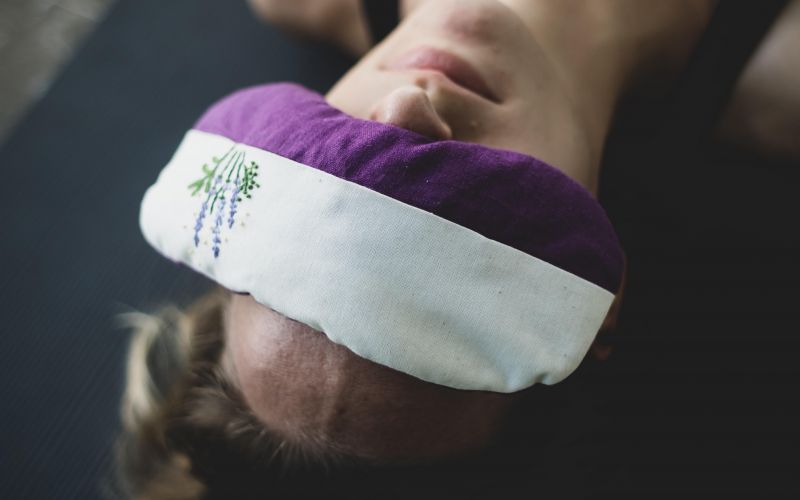
The practice of Yoga Nidra, which translates to 'yogic sleep', was first featured in the ancient yogic text, the Upanishads, written more that 2,500 years ago. Despite the name, you're not actually asleep during the practice, but in a state of consciousness between waking and sleeping without losing awareness. Essentially, a sleepless sleep!
Yoga Nidra has come to be very popular among busy, stressed and burnt-out westerners struggling to get sufficient rest, and it's easy to see why. This is a deeply restorative practice, which allows you to be calm, energised, and focused while cultivating an increased resilience to stress. It's thought that one hour of Yoga Nidra is equivalent to five hours of sleep!
How does Yoga Nidra work?
Entering Yoga Nidra is done through a guided meditation, which asks you to sense your body and breathe in a specific way to trigger the relaxation response. It's practised lying down, with no movement or equipment and so accessible to all.
What happens during the process is a gradual settling of electrical activity in the brain. Practising Yoga Nidra can cycle your brain waves down from the high-stress top levels of beta waves, through restful reveries of alpha waves and down into dreamy states of theta waves until you may, quite likely, come to rest for a while in delta waves of deepest sleep. This is where vital repair and restoration happens, and the stress hormone cortisol is removed from the system.
Interestingly, those suffering from depression rarely enter theta and delta brainwave states, which perpetuates the cycle of anxiety and depression. Yoga Nidra is a proven way to break this cycle in a natural way, and has even been used in the US army for soldiers suffering from PTSD. A study conducted in 2019 revealed Yoga Nidra significantly improved the self-esteem of university students after just eight weeks.
If you're interested in Yoga Nidra, or any other types of yoga and its many benefits, take a look at our collection of Yoga Retreats.
Why Wellbeing Escapes?